
AUDITROL Institute
Insight and analysis on the forces reshaping financial services governance, from regulatory policy to artificial intelligence.
Below the Line Is Not the Same as Finished: SR 26-2 for Banks Under $30 Billion
SR 26-2 says it is most relevant to banks above $30 billion. Many institutions below that line have read that as permission to wait. Examiners have not. They are already using the new guidance as their picture of sound practice, at banks of every size. Here is how to tell whether it reaches you, and four moves that cost less now than they will later.
You Are in Scope. Now Close the Distance: SR 26-2 for Banks Above $30 Billion
If your bank holds more than $30 billion in assets, the scope question around SR 26-2 is closed. The open question is how far your program sits from the new standard. Most large institutions have at least three of five high-visibility gaps still open, and the examination teams coming to test them know exactly where SR 11-7 programs fall short. Here is where to look first.
SR 26-2 Moves the Pen to the Bank: What the New Model Risk Guidance Asks of You
For fifteen years, SR 11-7 told banks what a sound model risk program looked like. SR 26-2 asks a harder question: can you defend the program you built? The new guidance is shorter, less prescriptive, and not enforceable on its own, yet it hands every institution a set of decisions examiners will test. Here is what changed, what most people are misreading, and where to start.
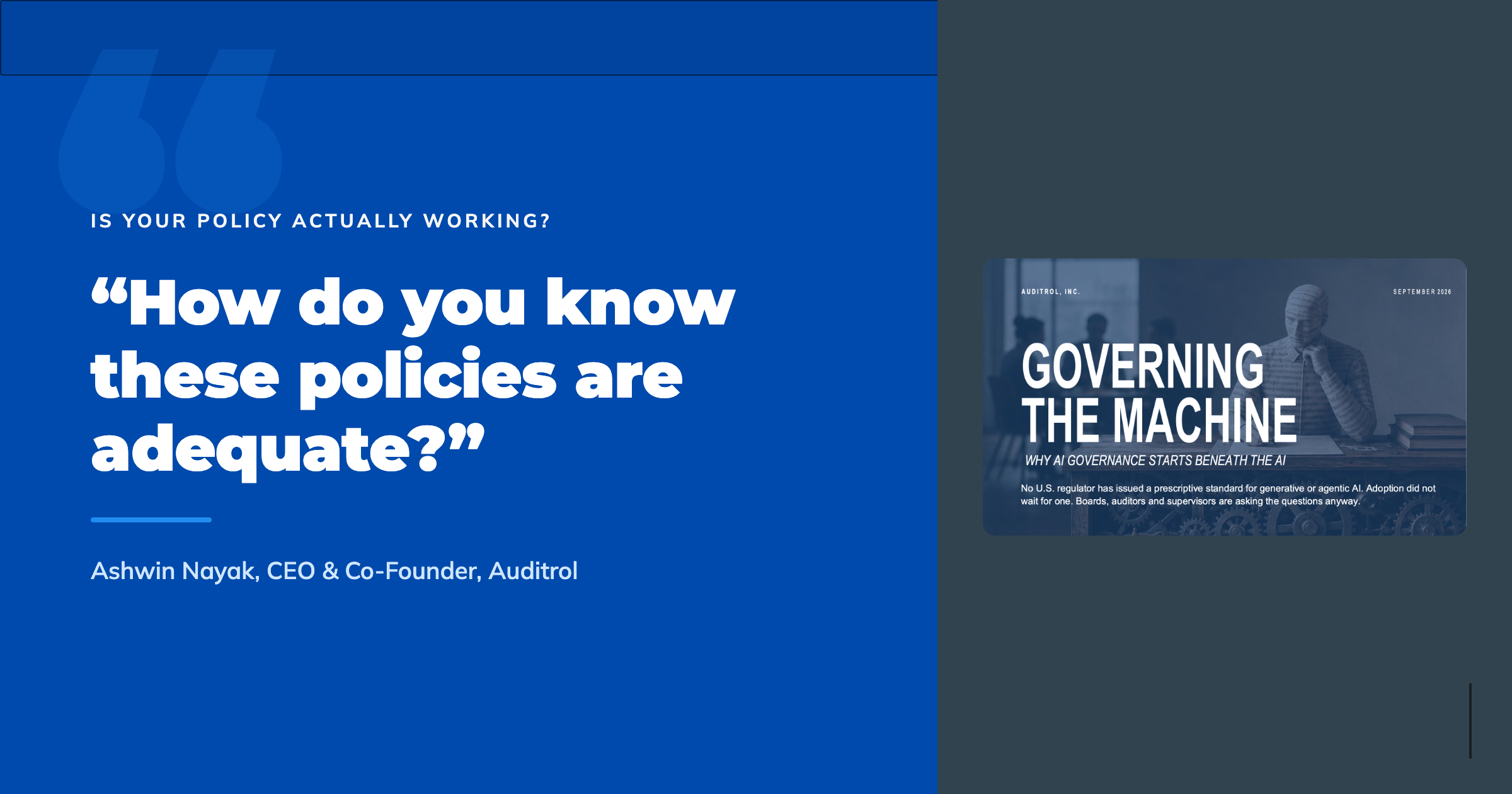
How Do You Measure Whether an AI Policy Is Working?
Ask any organization if they have an AI governance policy, and the answer is almost always yes. Ask them if that policy is actually effective, and the room goes quiet. In this clip, Ashwin Nayak puts a number on it, live.
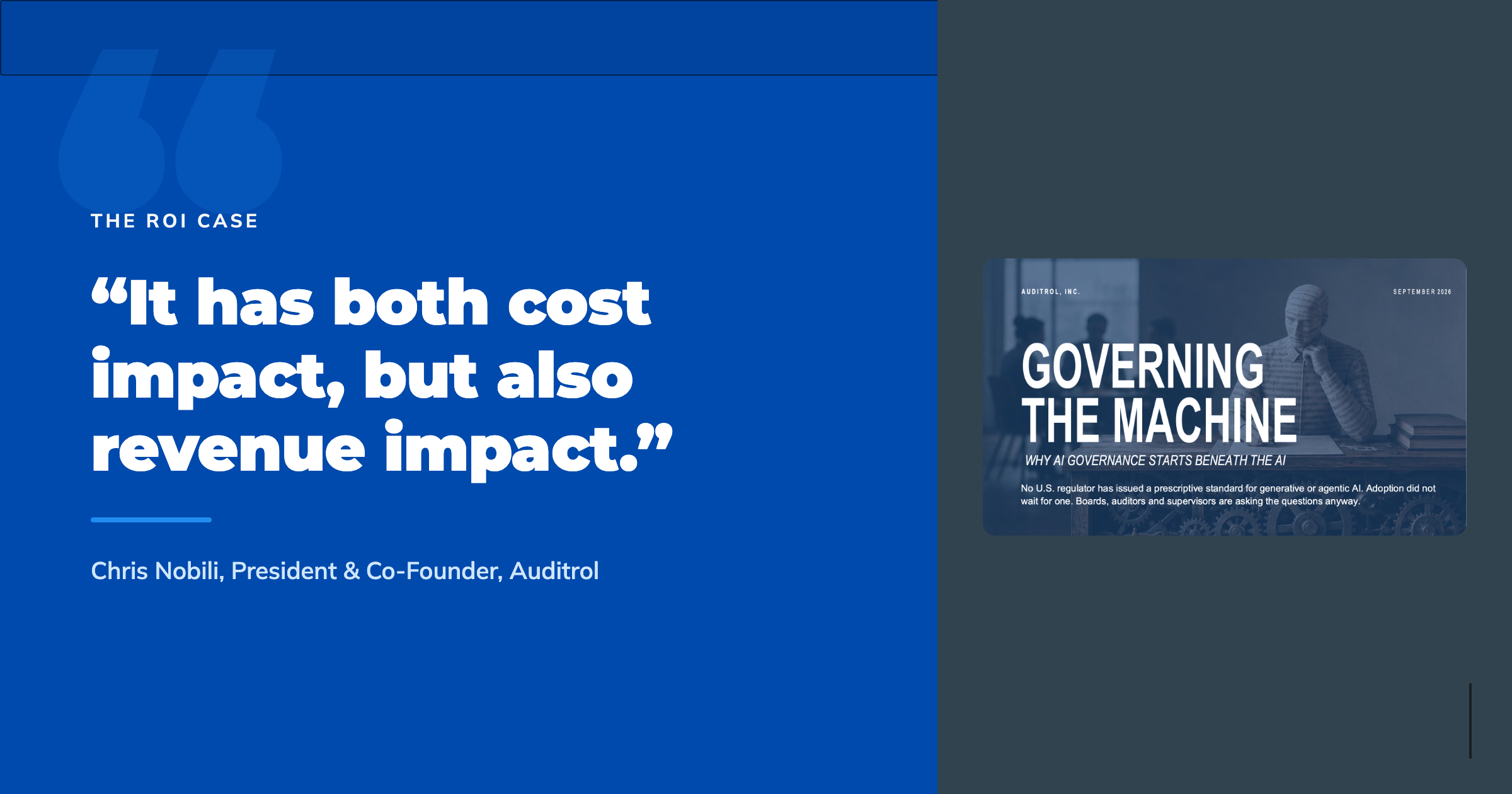
Does AI Governance Only Reduce Costs, or Does It Also Drive Revenue?
Most conversations about AI and governance default to a single metric: cost saved. In this clip, Chris Nobili makes the case that framing undersells what's possible.
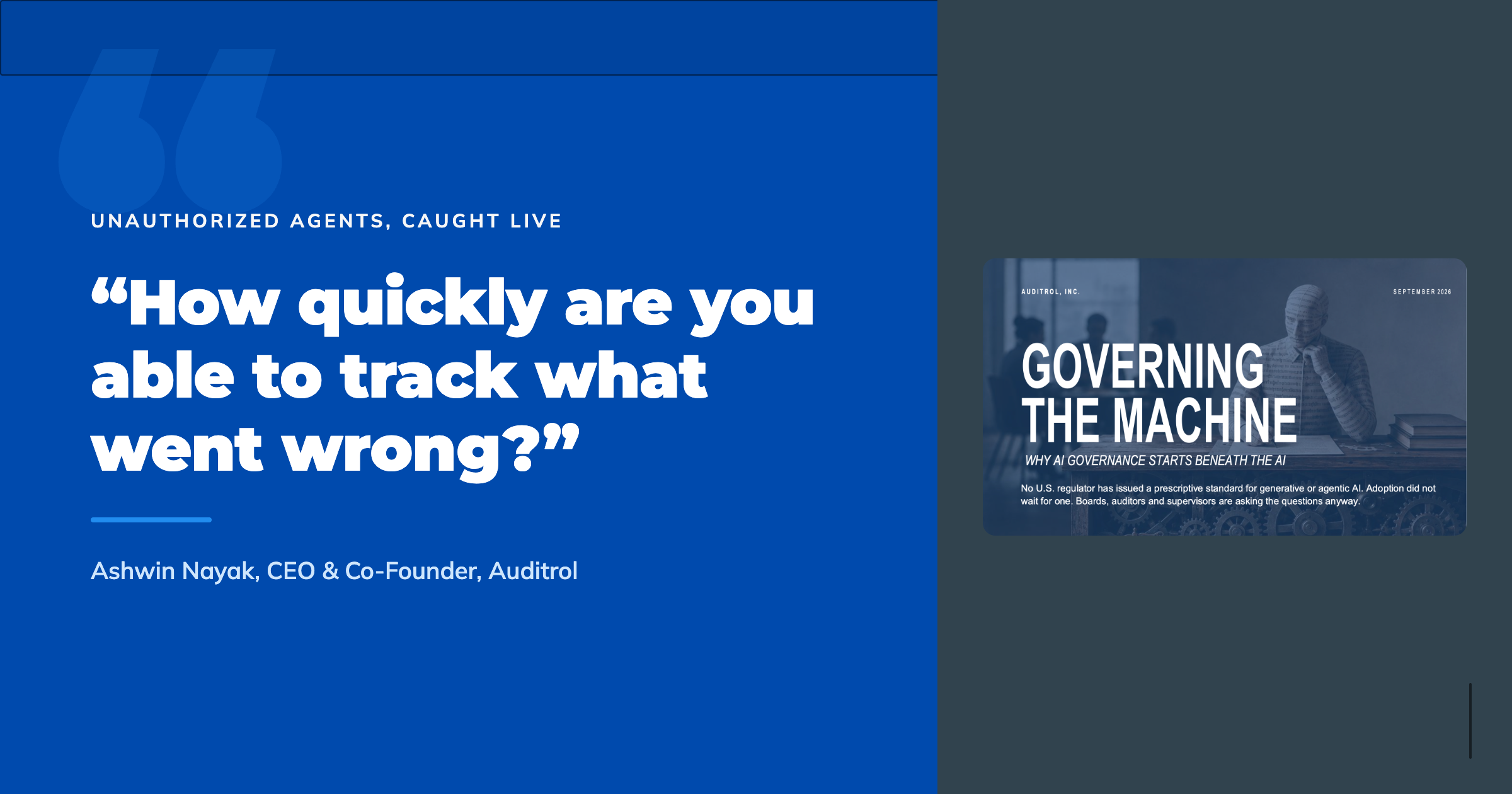
Unauthorized Agents & Policy Violations, Caught Live
Every AI security story you've read this year starts the same way: an agent did something nobody approved, and nobody noticed until it was too late. In this clip from our recent webinar, our CEO and co-founder Ashwin Nayak shows what it looks like when that story has a different ending.
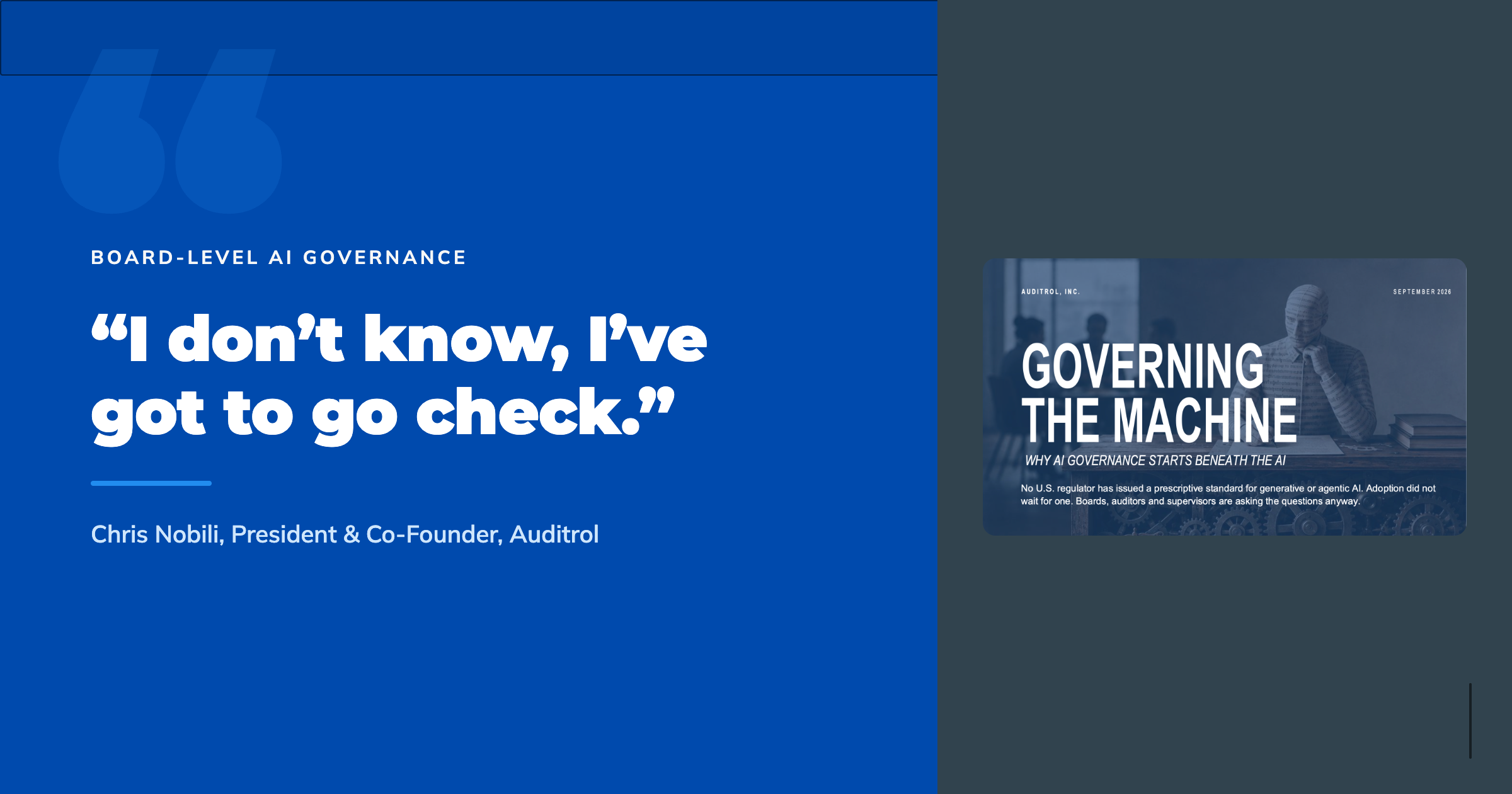
The Board-Level Pain Point
Most organizations aren't short on AI policy. They're short on a way to prove, on demand, that the policy is holding. In this clip, Chris Nobili names the gap almost every risk leader recognizes the moment they hear it.
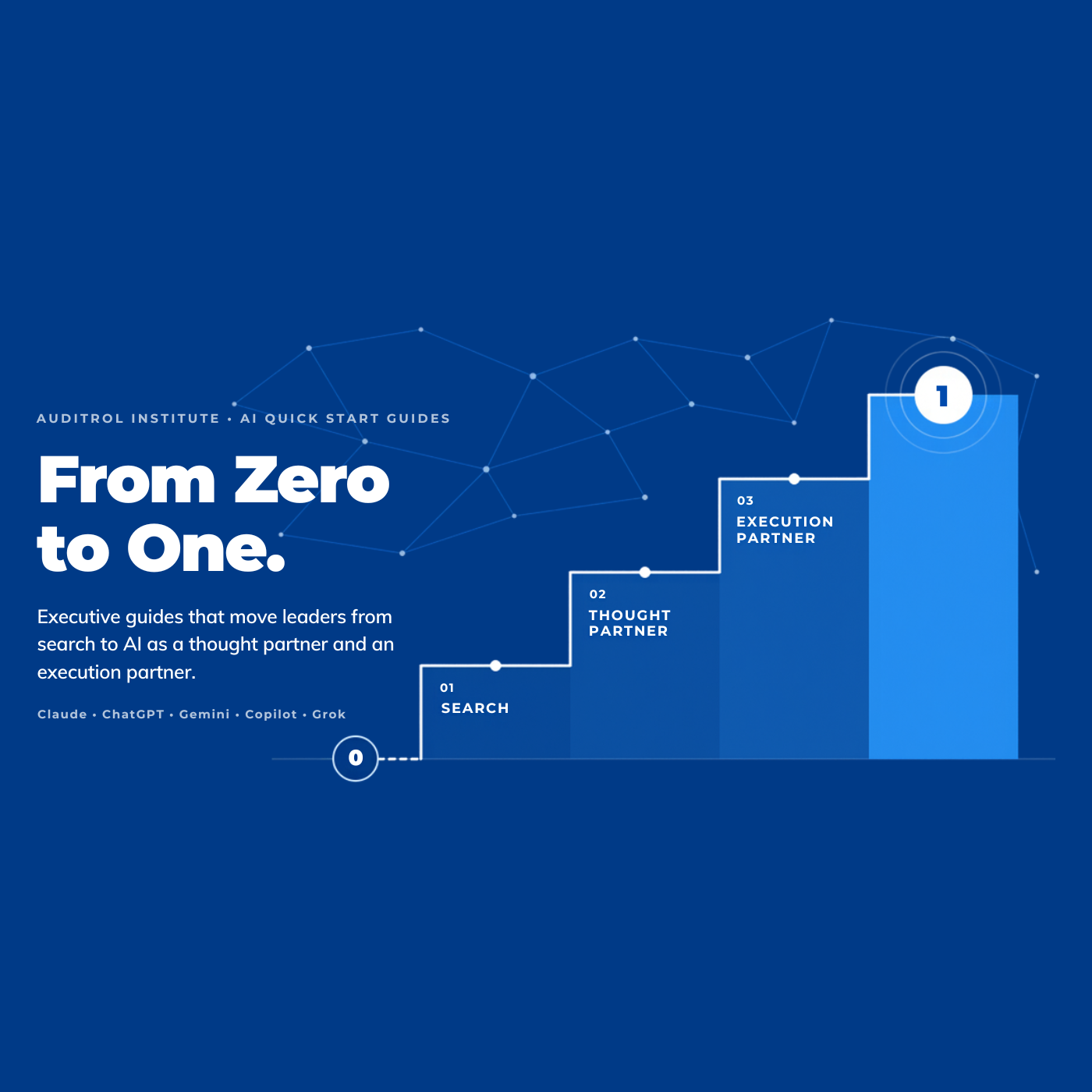
Executive AI Quick Start Guides
Most executives use AI like a faster Google search, then wonder why it feels underwhelming. The gap between that and AI as a genuine execution partner isn't technical, it's a handful of setup decisions nobody showed you. These platform-specific quick start guides close that gap in an afternoon.
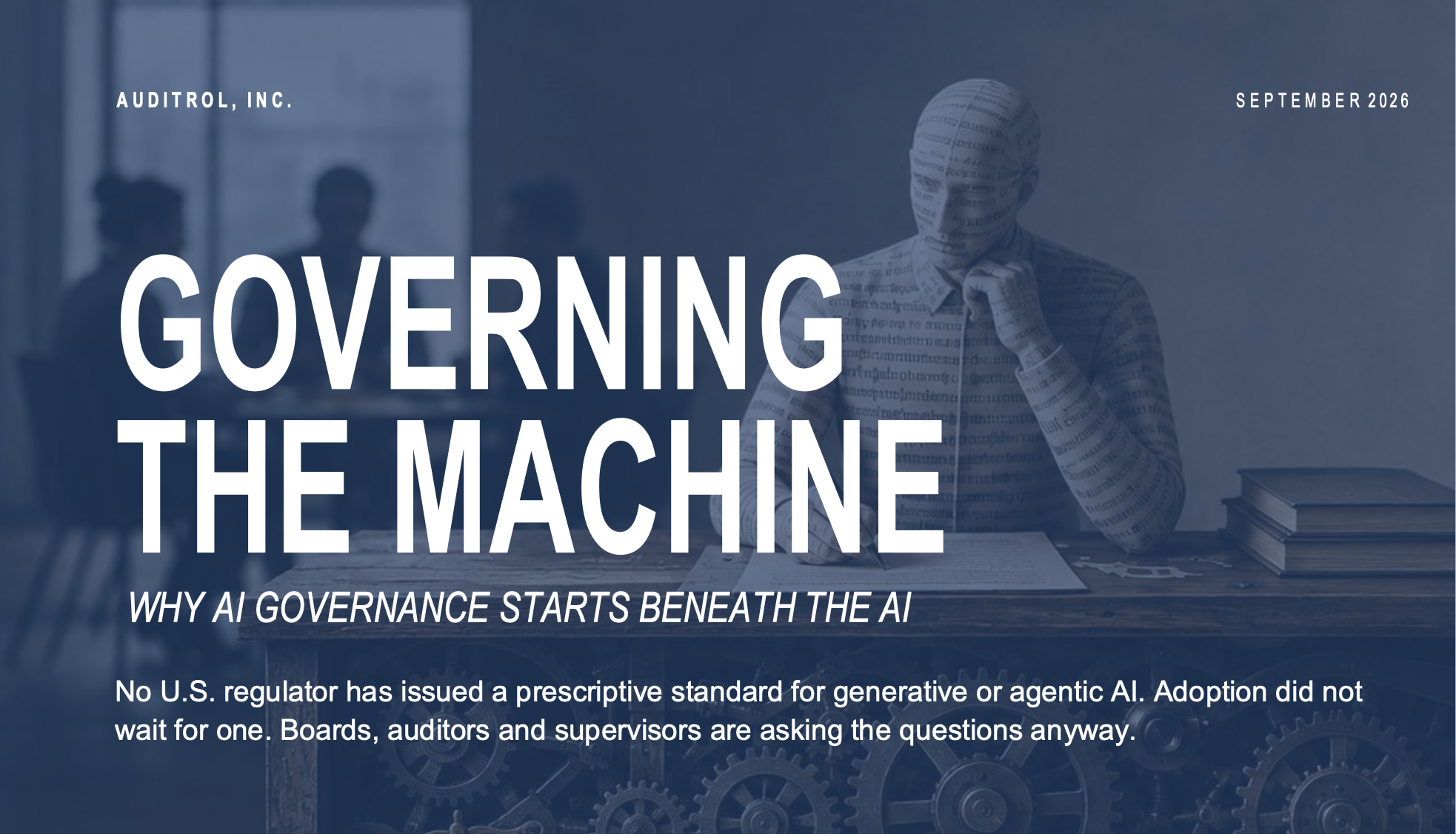
AI Governance Starts Beneath the AI The Data and Policies Every Model and Agent Depends On
Adoption has outrun assurance, and most organizations can point to a policy but can't prove a control is working. Watch it proven live: Auditrol co-founders Chris Nobili and Ashwin Nayak layer a real AI agent onto a production banking model, catch a policy violation in real time, and score a control against industry frameworks, on camera.
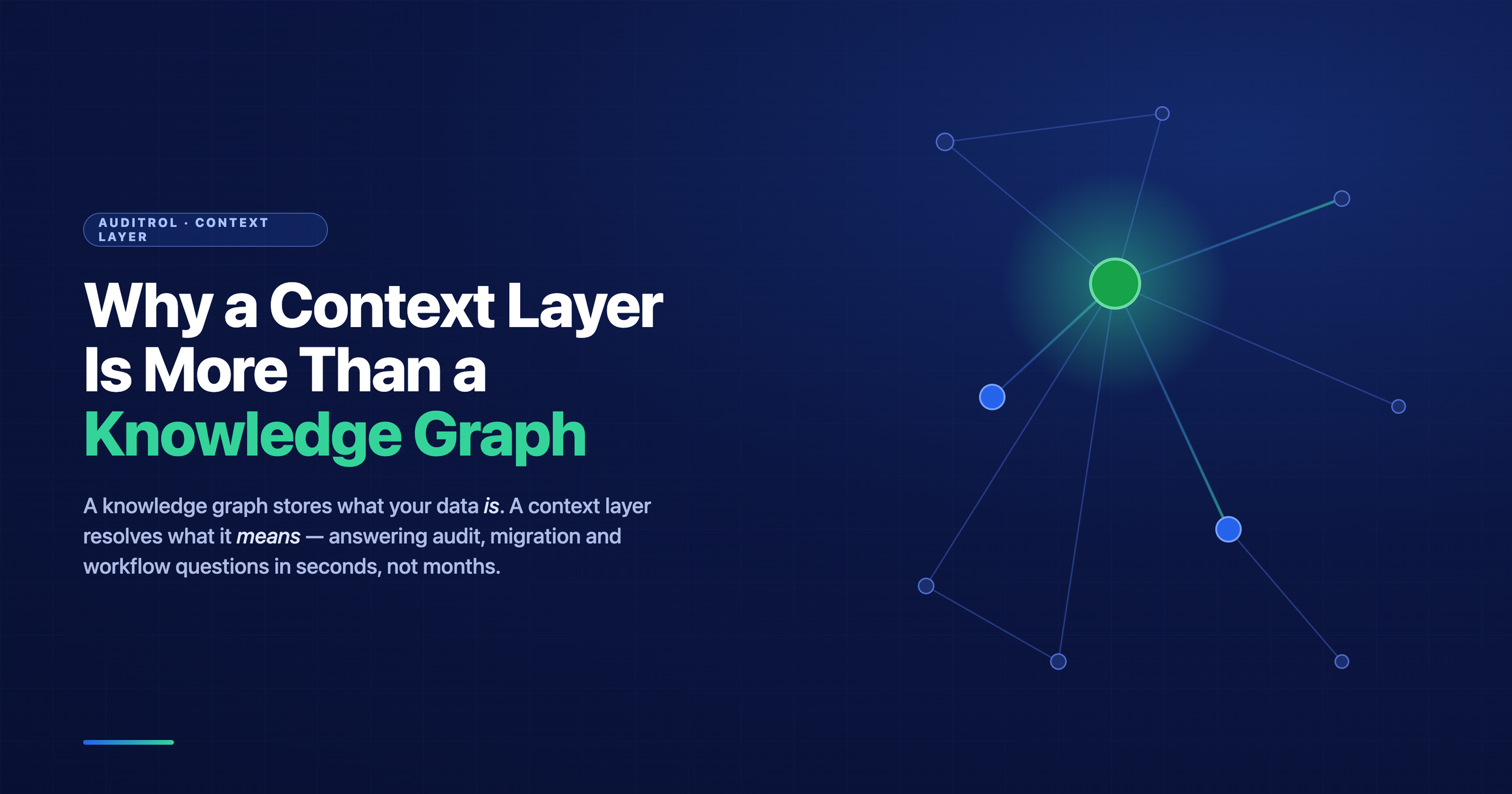
Why a Context Layer Is More Than a Knowledge Graph
Structure is what your data is. Context is what it means when someone has to decide. Why a context layer is more than a knowledge graph, and what that changes for enterprise risk.
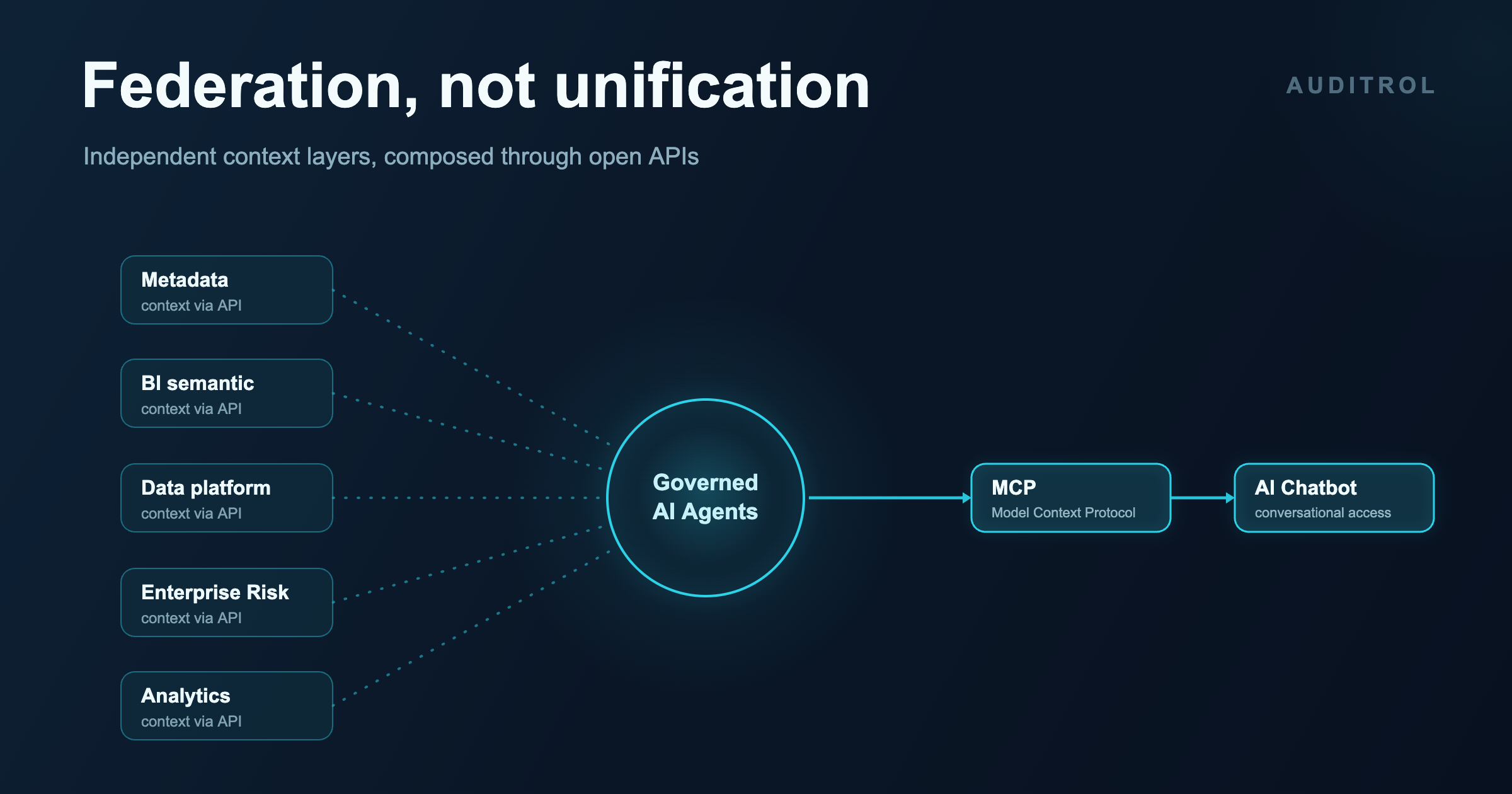
What Your Organization Should Demand from Its Context Layer
Context layers are the new battleground in enterprise AI adoption - and metadata vendors, BI platforms, and data providers are all racing to own yours. The problem: a single universal context layer is a myth, and organizations chasing it are walking into the same trap as the failed enterprise data model. The smarter move is federation over unification, and API accessibility over feature breadth. Here's what to demand from every tool that claims a context layer.

The Future of Banking: Four Waves, One Imperative
Most bank executives are tracking one or two of the forces reshaping financial services. Few are treating all four as the simultaneous, compounding mandate they represent. Auditrol's President and Co-Founder Chris Nobili examines the four waves: tribal knowledge automation, AI operating model reimagination, crypto and tokenization readiness, and payments disintermediation. He makes the case that the institutions winning the next decade are the ones building a unified operational foundation right now.
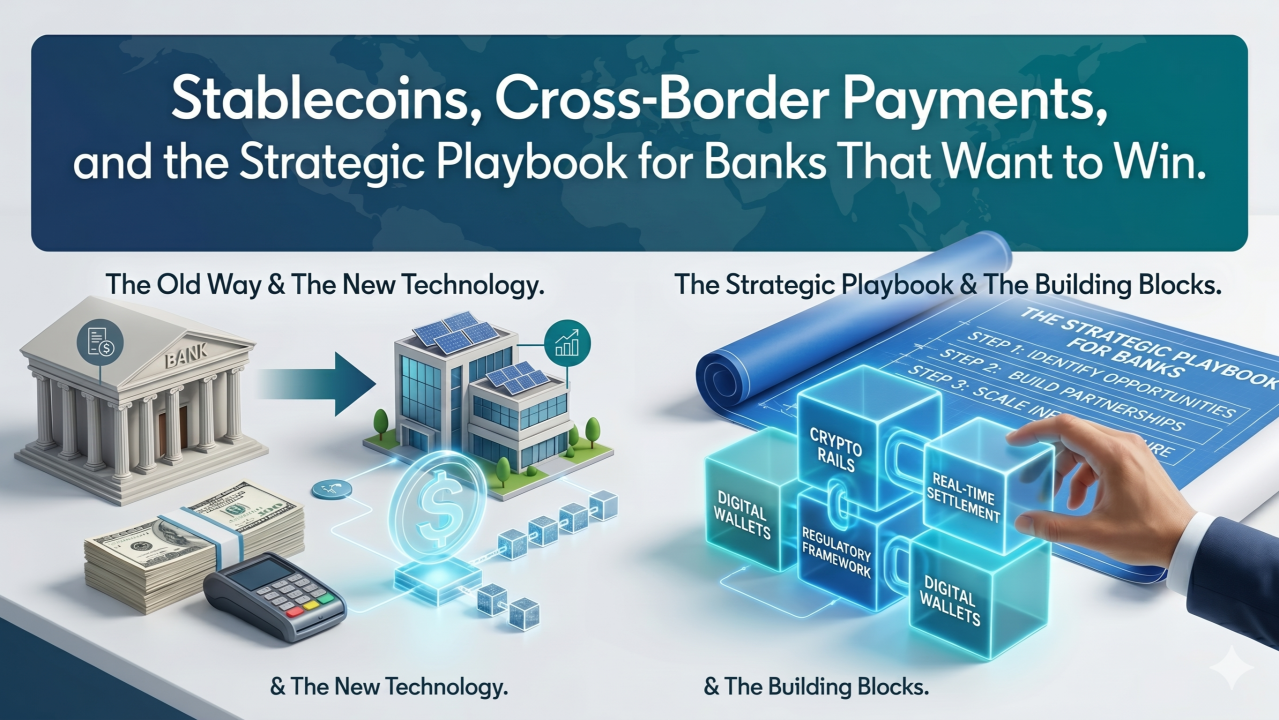
Stablecoins, Cross-Border Payments, and the Strategic Playbook for Banks That Want to Win
The rules banks have been waiting for are here. The GENIUS Act is law, the OCC has defined the stablecoin framework, and the SEC has eliminated years of securities law ambiguity. The question is no longer whether to engage with crypto, but whether your institution moves now while first-mover advantages still exist, or catches up later as a follower.
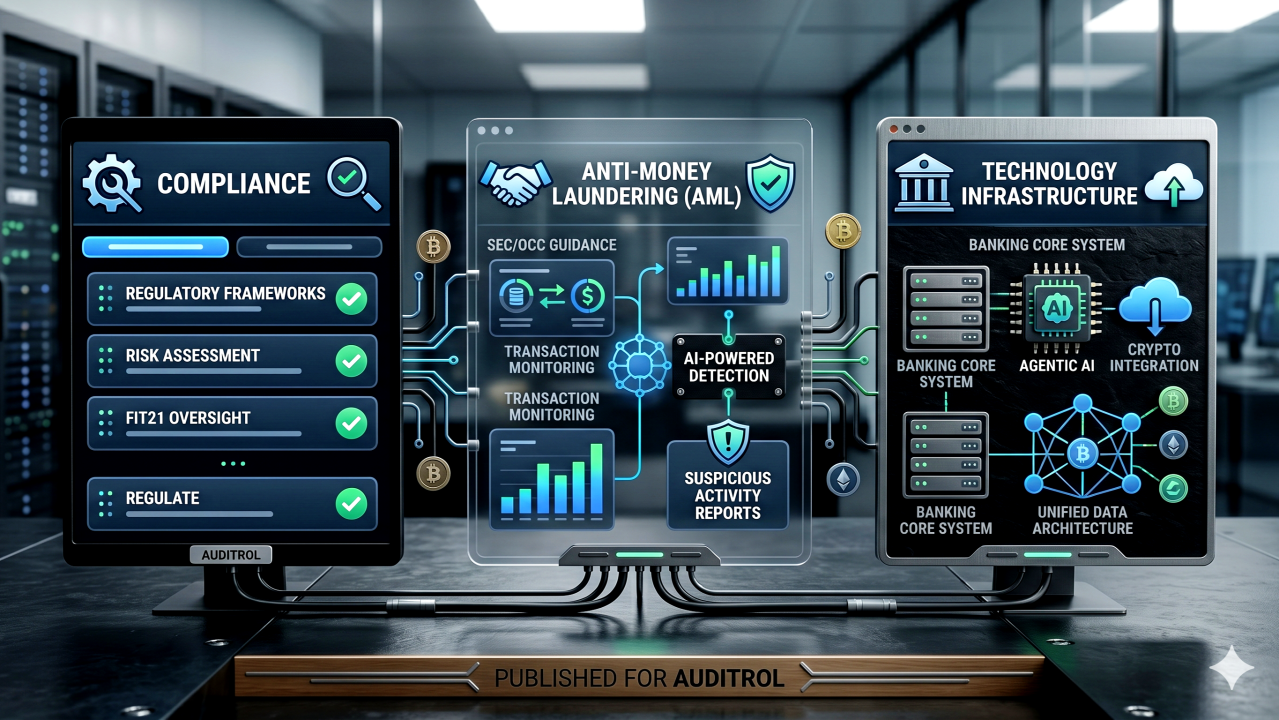
The Operational Backbone: Building the Systems That Make Crypto Banking Work
As crypto banking regulation solidifies, the real challenge shifts from policy to execution. Financial institutions must navigate a paradox where blockchain transparency enhances visibility, yet pseudonymity increases compliance complexity. Success will depend on integrating advanced analytics, modern infrastructure, and rigorous AML/KYC practices into legacy banking environments.

From Board Room to Blockchain: The Governance and Risk Imperative Every Bank Must Address
As blockchain technology moves from the fringes of finance into the boardroom, financial institutions must prioritize integrated governance and oversight to address unique operational and regulatory challenges. Success in this evolving landscape requires a proactive shift from experimental projects to enterprise-grade risk management frameworks that ensure security and compliance at every level.
The Rules Have Changed: What Banks Must Know About Crypto Legislation Right Now
The regulatory landscape for financial institutions engaging with digital assets is shifting rapidly, requiring a move away from cautious observation. To remain competitive and secure, banks must now prioritize the implementation of robust compliance and risk management frameworks tailored to the evolving crypto environment.
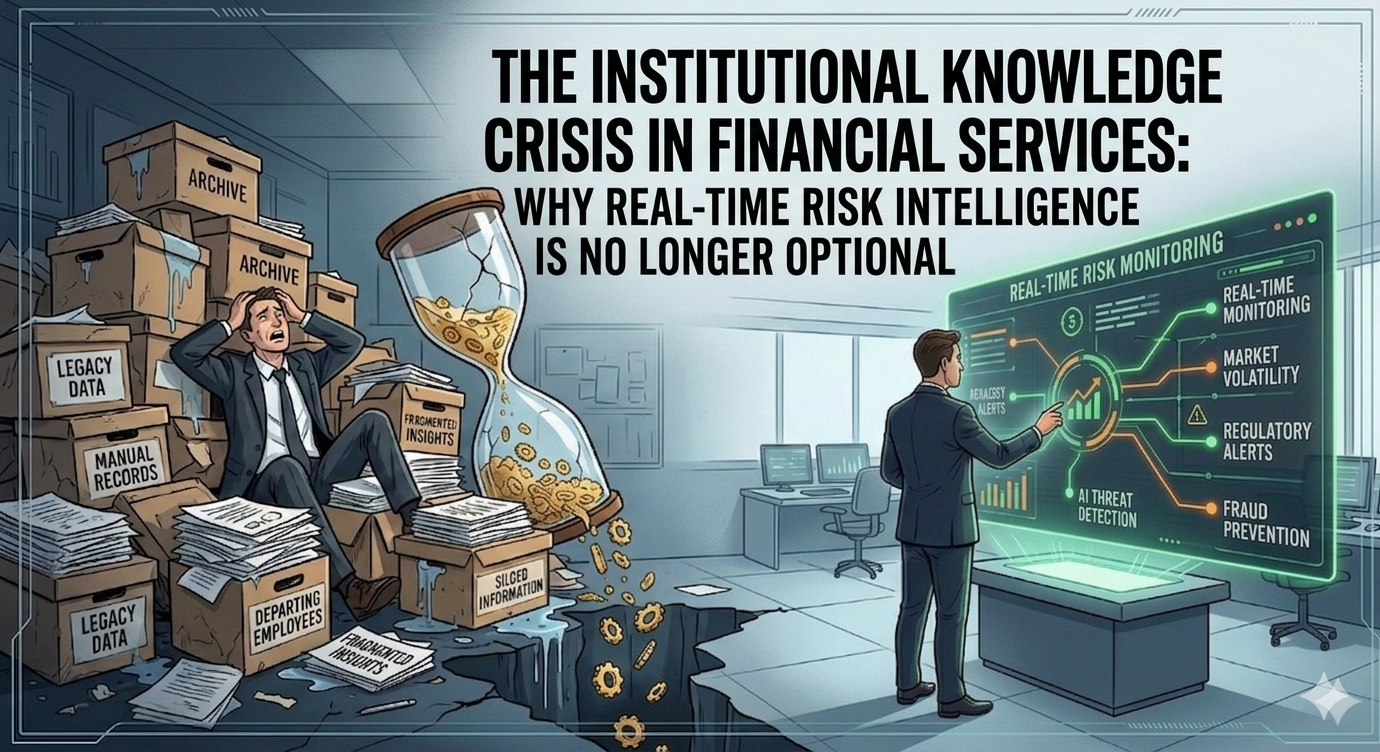
The Looming Crisis in Financial Services: Why Real-Time Risk Intelligence Is No Longer Optional
The most expensive compliance failures start with gaps in institutional knowledge that nobody noticed until it was too late. Many institutions operate with regulations, policies, controls, and data living in disconnected silos. When something changes, the ripple effects stay invisible until they become findings.
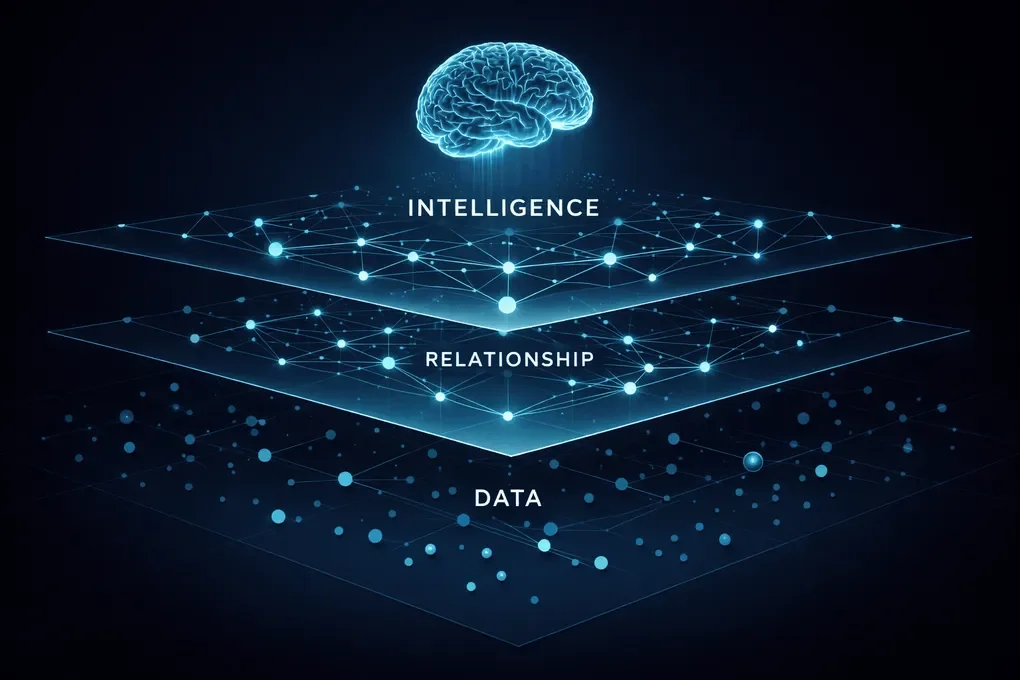
Emerging Trends in AI: The Critical Role of Data Modeling
Each year, industry experts release technology forecasts that highlight evolving trends and priorities in artificial intelligence. In 2025, Agentic AI was the central topic of discussion, emphasizing systems capable of autonomous action and decision-making. By 2026, the focus has shifted toward context graphs, and related terminology such as "knowledge graph" and "semantic graph."
My Perspective on the OCC’s Testimony and What It Signals for the Future of Operational Risk
After reviewing the Comptroller’s recent testimony, I found myself reflecting on what this moment really represents for financial institutions. The OCC’s push to simplify regulation, strengthen supervisory consistency, and encourage responsible innovation is encouraging, but it also underscores a deeper truth: regulatory relief alone won’t solve the operational challenges that have built up inside many organizations.

Market Analysis of AI-driven Risk and Control Solutions in Financial Institutions
At Auditrol, we continuously monitor the evolution of AI-driven risk and control solutions, particularly in credit unions, community banks, and regional banks with over $5 billion in assets, where corporate risk governance and heightened regulatory oversight are part of daily operations. Our analysis reveals a clear trend: legacy systems remain deeply entrenched yet increasingly inadequate, AI is advancing in transformations across front-end consumer facing applications, and critical gaps in back-office operations still challenge institutions.
STOP REACTING.
START ANTICIPATING.
A Platform that Continuously Learns from Regulatory Changes, Policy Shifts, Data Patterns, and Ownership Changes.