
Emerging Trends in AI: The Critical Role of Data Modeling
Annual Technology Forecasts: Observations and Shifts
Each year, industry experts release technology forecasts that highlight evolving trends and priorities in artificial intelligence. In 2025, Agentic AI was the central topic of discussion, emphasizing systems capable of autonomous action and decision-making. By 2026, the focus has shifted toward context graphs, and related terminology such as "knowledge graph" and "semantic graph." Despite ongoing changes in terminology, the underlying foundation for these technologies remains consistent: they all rely on organizational data as the primary source of context for reasoning and intelligent behavior.
The Importance of Data Relationships in AI
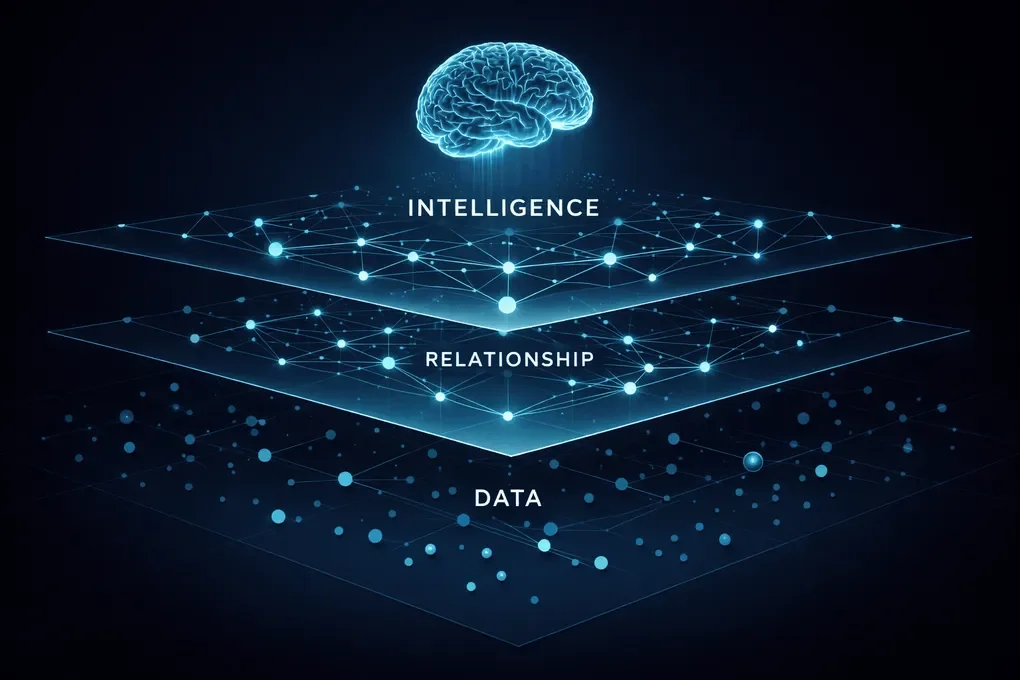
One critical aspect that is often overlooked in the development of AI systems is the necessity for well-defined data relationships. Success in both Agentic AI and context-graph-based approaches depends on structured entities, clear semantics, and explicitly defined relationships between data points. Whether orchestrating tasks or reasoning over complex contextual information, true intelligence in AI systems emerges from a foundation of well-organized data and meaningful connections between entities.
Practical Example: Financial Services
In the financial services sector, the importance of data relationships becomes especially clear. Effective risk reporting and regulatory compliance rely on a thorough understanding of various data elements, including regulations, risk domains, business processes, controls, and ownership. Without a robust data model, AI initiatives in this industry risk becoming purely technology-driven, missing the accuracy, explainability, and trustworthiness necessary for successful outcomes.
RAG-Based Applications and Context Graphs
Applications that utilize Retrieval-Augmented Generation (RAG), such as Agentic AI and Graph RAG, directly demonstrate the need for well-defined data structures and a managed business glossary. Context graphs build upon this by modeling bidirectional relationships between entities, capturing both the direction and meaning of connections. This allows for more advanced reasoning within AI systems.
Fundamental skills in database design, data structures, and understanding relationship types are therefore essential for building effective AI products.
The Enduring Value of Data Modeling
While technology trends and industry buzzwords continue to evolve, the true differentiator in AI remains unchanged. The discipline of understanding business context and maintaining strong data modeling practices is a critical factor for long-term success. This principle has remained constant for decades, regardless of changes in the technological landscape.
A Strategic Vision for the Future of Data Relationships
The "magic" of AI is often credited to complex algorithms, but the reality is much more practical. The true potential of these systems depends on the structural integrity of the data they consume. It is no longer just about what data an organization has, but about how they are connected.
This fundamental evolution is something that we are constantly thinking about. The priority is not merely keeping up with the latest industry buzzwords. Instead, we are focused on ensuring that foundational data relationships are robust enough to support the next generation of autonomous reasoning. The journey from relational data models to living context graphs is only the beginning.